Materials & Construction
This collection of 3D artwork represents an intentional collision between structural ruggedness and everyday accessible items. Constructed using raw materials sourced directly from the local lumber yard paired with everyday decorative elements from the 99-cent store, each sculpture bridges the gap between high-concept fine art and unpretentious material origin.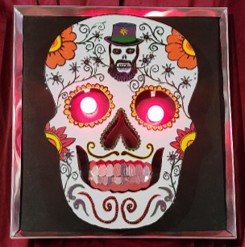
Hand-Carved & Painted 3D Sculpture • 20″ × 20″ × 3″
Classic marigold floral scrollwork combined with metallic detailing, traditional mustache, and glowing focal points. $250.00

Hand-Carved & Painted 3D Sculpture • 20″ × 20″ × 3″
Features handcrafted theatrical framing, luminous eye sockets, and detailed bone hand motif set against dramatic velvet-black backing. $250.00
What is the 99¢ Ethic?
At its core, the 99¢ Ethic is a direct-to-consumer approach to art—bypassing traditional gatekeepers, institutional tastemakers, and elite galleries who historically dictate what the public should or shouldn’t see, or what deserves to be appreciated. Art, in its purest form, is an unmediated conversation. It relies on a direct exchange between the maker and the observer, completely free from institutional permission. One party presents a question—visually, auditorily, or kinesthetically—and the other experiences it. When the work meets the viewer without intermediary filters, both the presentation and the reception are colored purely by the lived experiences of the individuals involved, creating an authentic, new experience where those two worlds collide.From the Perspective of the One Making the Art
The 99¢ Ethic can mean:
- The materials are purchased from the 99¢ store or other such discount establishments.
- The representation of the idea, concept, or image is a facsimile—like a knock-off of an expensive watch or handbag purchased on Canal Street.
- The presentation is that of a Penny Dreadful, Pulp Fiction, or a Comic Book: pretentious, but lacking airs.
- The price or label of the 99¢ Ethic is designed to entice by associating it with psychological pricing and all the theories, history, and stories behind explaining the phenomenon.
From the Perspective of the One Viewing the Art
The 99¢ Ethic can mean:
- This is something authentic; it took time to conceive, construct, and make this piece available. Within that is its value. The elite and privileged do not determine its value.
- Thought has gone into this, and you can experience it as you wish.
- This is to entertain and provoke an emotion, like a Penny Dreadful, Pulp Fiction novel, or other ubiquitous offering.